
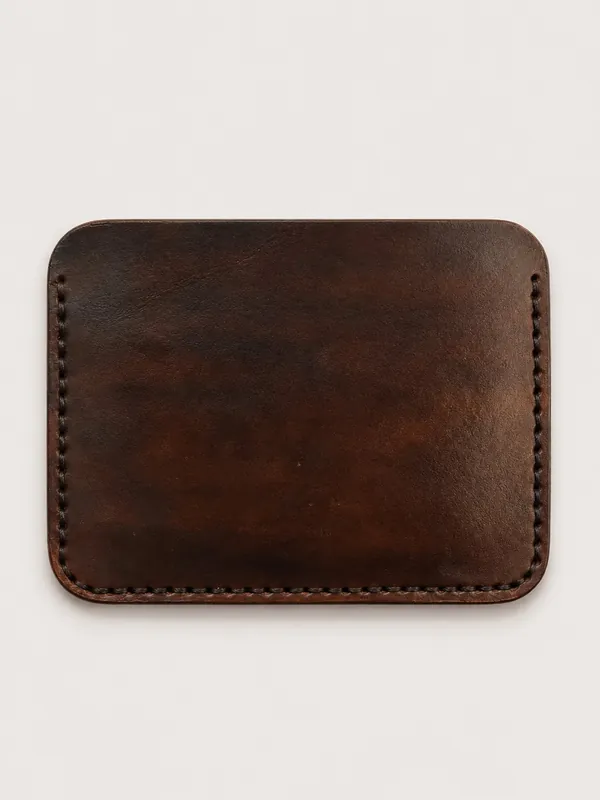
There is a perceptible shift in how some people relate to what they buy and wear. After years when a large logo and visible branding signaled that something was worthwhile, an opposing idea has gained ground: that what is truly valuable does not need to advertise itself. This shift has an English name—quiet luxury, which in Spanish could be rendered as understated or silent luxury—and is clearly reflected in how people choose an artisan leather accessory.
What quiet luxury is
Quiet luxury is not a seasonal trend: it is a stance. It prioritizes material quality over brand visibility, the timeless over the seasonal, and seemingly effortless elegance over calculated ostentation. A good object speaks for itself, without visible logos, gold-colored metal hardware or labels explaining how much it cost.
In clothing and accessories, this translates into pieces made from fine materials that improve with use, clean silhouettes without unnecessary ornament, a palette of neutral or restrained colors, and attention to detail that can only be appreciated up close. It is not about invisibility: the interest lies in the object itself, not in what the object signals.
What distinguishes quiet luxury from low-cost minimalism—with which it is sometimes confused—is precisely material quality. An ordinary cotton T-shirt can be neutral and logo-free, but it is not quiet luxury. What defines this aesthetic is that the piece is clearly good to someone who knows it, even if not to someone who does not know how to look. That separation between those who understand and those who do not is part of its appeal.
Why artisan leather embodies this philosophy
Artisan leather accessories, especially those made from vegetable-tanned leather, fit naturally with the philosophy of quiet luxury. The reason is material, not just aesthetic: vegetable-tanned leather responds to use. It does not merely endure, but evolves: over time, it usually develops a patina that records habitual gestures, contact with the hand, the light it has been exposed to. That patina is not a defect: it is the object’s history accumulated on its surface, and it is different on every piece.
It is worth clarifying here that vegetable-tanned leather is animal hide tanned with tannins—plant-derived compounds; vegetable tanning, like all tanning, is a chemical process—and should not be confused with so-called “vegan leathers,” synthetic- or plant-based alternative materials that are not hide. Confusion is common because the names sound similar. The distinction matters both to those seeking traditionally tanned hide and to those who prefer to avoid animal-derived materials.
A well-made artisan leather piece does not feature a central logo or branded hardware. Its interest lies in its construction: hand-sewn stitching, the burnished edge, the thickness of the thread, the coherence between material and form. These details are only visible up close, with time. They are the language of quiet luxury applied to an everyday object.
Specific signs of quiet luxury in a leather accessory
There are specific aspects by which you can recognize a piece reflecting this sensibility, beyond whether it carries a recognized brand label:
The silhouette. Quiet luxury pieces have clean shapes, without unnecessary additions. A wallet with too many visible compartments, eye-catching fastenings or external embellishments is designed to impress at first glance. A quiet luxury piece fulfills its function with the cleanest possible form.
The materials. The material speaks for itself. In leather, this means the finish does not try to conceal the material’s nature but to reveal it. The grain, the texture, the way the shade varies slightly from one area to another: all this signals a genuine material worked with care, not a uniform surface manufactured to resemble something it is not.
Construction details. Hand stitching, carefully finished edges, fastenings that are solid without being flashy. These are details you cannot see from a distance but appreciate over years of use. Quiet luxury is not in the packaging; it is in what stands the test of time.
What is not quiet luxury, even if it looks like it
Not everything without visible logos is quiet luxury. Imitations exist too: low-quality materials in neutral colors that reproduce the silhouette but not the material experience, inexpensive pieces with a minimalist appearance but weak construction, brands that have adopted this aesthetic’s visual vocabulary without the materials or construction supporting it.
The difference tends to reveal itself over time and with use. A well-constructed and cared-for artisan piece in vegetable-tanned leather settles in and usually develops a patina with use. A poorly constructed piece, whatever its material, tends to show deterioration sooner: stitching giving way, surfaces peeling at the corners, color fading unevenly. This is not an absolute rule—there are well-executed alternative materials and poorly worked leathers—but construction and material quality are much more apparent after a year of regular use than on the first day.
This also explains why artisan leather makes sense within the logic of quiet luxury even when its initial price may seem high. Quality that does not advertise itself does not have to be cheap; it only has to be real.
If you would like to see Woodman Studio’s pieces and Oleg’s working process, you can visit the shop and the Handmade section. For any questions about materials or a particular model, write to us on WhatsApp or through the contact page.
Frequently asked questions
What is understated luxury, or quiet luxury? Quiet luxury is a philosophy of consumption that prioritizes material and construction quality over visible logos and flashy branding. Quiet luxury pieces are recognizable to those who know how to look, but do not advertise their value obviously. The English expression quiet luxury—literally “silent luxury” in Spanish—describes the same idea.
Is artisan leather always quiet luxury? Not automatically. What defines quiet luxury is the combination of genuine quality, a clean silhouette and an absence of ostentation. An artisan leather accessory with extensive visible branding does not meet that definition even if the leather is good. Conversely, a simple piece of well-worked leather, without prominent labels, can be a perfect example of quiet luxury even if its artisan is little known.
What characteristics does a leather accessory have if it fits with quiet luxury? A clean silhouette without unnecessary ornament, material that shows its nature rather than hiding it, construction details visible up close—stitching, edges, fastenings—and the ability to evolve well with use rather than deteriorate. The object’s interest lies in itself, not in what it signals.
How can you distinguish real quality from the appearance of quality in a leather accessory? The most reliable indicators are construction details (even stitching, finished edges, fastenings that work well), how the material behaves with use (well-worked vegetable-tanned leather usually develops a patina; low-quality materials tend to peel or flake sooner), and the information available about the material and manufacturing process.
Where can I find artisan leather accessories with this approach? In the Woodman Studio shop, you can browse the catalog of current pieces: bags, wallets and card holders in hand-worked vegetable-tanned leather, with clean design and no visible branding. You can also discover Oleg and his process in the Handmade section.