
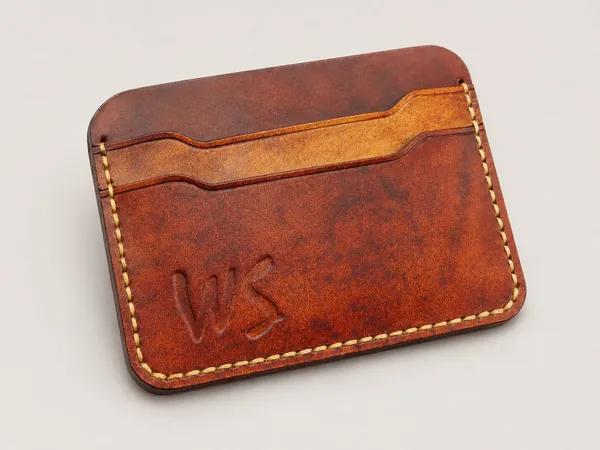
Caring for vegetable-tanned leather starts with a basic principle: less is more. This material reacts visibly to excess water, cleaning products not intended for it and direct heat. The good news is that, in most everyday situations, keeping it in good condition requires very little: a dry cloth, attention and caution before applying anything to its surface.
An important preliminary clarification: this article discusses vegetable-tanned leather, meaning animal hide tanned with plant-derived tannins. It should not be confused with materials sometimes marketed as “plant-based leather” or “vegan leather,” which are synthetic or plant-based alternatives requiring completely different care.
Why vegetable-tanned leather deserves specific care
Vegetable tanning uses tannins extracted from bark, wood and other plant parts to transform hide into a dense, durable material. Tannins are plant-derived chemical compounds—vegetable tanning is also a chemical process, simply using different agents—and produce leathers that tend to evolve visibly with time and use, deepening their warm tones, as explained by the Genuine Italian Vegetable-Tanned Leather Consortium, one of the sector’s reference sources.
This ability to evolve is part of its appeal, but it also means that whatever you apply—water, products, conditioners—can leave a mark. Its specific behavior depends heavily on each piece’s finish, and finishes vary between artisans and leathers. The general rule is therefore simple: when in doubt, apply nothing and ask for advice.
The foundation of cleaning: a dry cloth
For routine maintenance, a cotton or microfiber cloth—clean, soft and lint-free—is the main tool and, in many cases, the only one needed. With the cloth completely dry, work over the surface gently, without pressing. For stitching and edges, a soft-bristled brush helps remove accumulated dust without harming the material.
This dry cleaning can be done whenever you notice dust or surface dirt, or before putting the piece away for a season. It poses no risk and covers the vast majority of the actual needs of an everyday wallet, card holder or bag.
Moisture, products and conditioners: use only with care
If dirt does not come off with a dry cloth, approach the next step cautiously:
- Minimal, localized moisture. A barely damp cloth—never soaked, never dripping—may help with localized dirt, provided your piece’s finish allows it. Do not immerse the piece or apply water directly to it.
- Cleaning products or conditioners only if compatible. Not all vegetable-tanned leathers or finishes tolerate the same products. Before using any cleaner or balm, consult the instructions of the artisan who made the piece: they know the specific leather and finish.
- Testing in an inconspicuous area is a precaution, not a guarantee. Trying a product somewhere less visible helps detect obvious reactions, but does not guarantee compatibility with the finish. Some changes appear over time. An inconspicuous test complements prior consultation; it does not replace it.
What is universal is what you should avoid: household cleaning products (glass cleaner, bleach, solvents), alcohol, excess water and any “home remedy” whose effect on your finish you cannot predict.
Drying: no shortcuts
If the piece becomes damp—from cleaning or an accident—let it dry at room temperature in a ventilated place, in its normal position of use. Never use a hair dryer, radiator or direct sunlight: concentrated heat hardens the leather fibers and can cause stiffness or cracks in the finish. Slow drying is not a problem; forcing it can be.
What to do about a significant stain
If a significant stain appears—grease, ink, a colored liquid—the most sensible approach is not to improvise treatments. Generic remedies circulating online may work on one leather and ruin another’s finish, and some poorly judged attempts set the stain rather than remove it. Before applying anything, ask for an assessment: describe the stain, send a photo if you can and wait for guidance from someone who knows the piece or a leather specialist.
The only immediate action recommended is to absorb excess liquid with a dry cloth, without rubbing, to prevent it from spreading.
If you have questions about caring for your piece, you will find additional information in the Woodman Studio care section. For specific questions about your accessory, you can write through the contact page or on WhatsApp.
Frequently asked questions
Can I use olive oil, coconut oil or other home remedies? It is not recommended. Cooking oils and other household remedies can darken leather unevenly, leave permanent stains or accumulate dirt over time, and their effect depends on each piece’s specific finish. If you think your piece needs conditioning or treatment, consult the artisan first.
How often should I clean or condition my wallet or card holder? There is no universal frequency that applies to every piece. Cleaning with a dry cloth can be done whenever needed, without risk. Conditioning, however, depends on the leather type, finish and use: follow the artisan’s instructions and observe the piece rather than applying fixed schedules. Too much product also harms leather.
What should I do if the leather gets scratched? It depends on the scratch’s depth and the piece’s finish; there is no single or guaranteed solution. For scratches that worry you, the safest approach is to consult the artisan or a leather specialist before trying anything yourself.
Are wet wipes suitable for cleaning vegetable-tanned leather? They are not recommended. Most contain alcohol, fragrances or preservatives that can dry out, stain or alter the finish. If a dry cloth does not remove the dirt, ask for advice before resorting to any product not intended for leather.
Can I clean the inside of my piece in the same way? For the inside, a dry cloth is usually enough. Avoid dampening linings and interiors; if you think they need more thorough cleaning, ask for guidance first.