
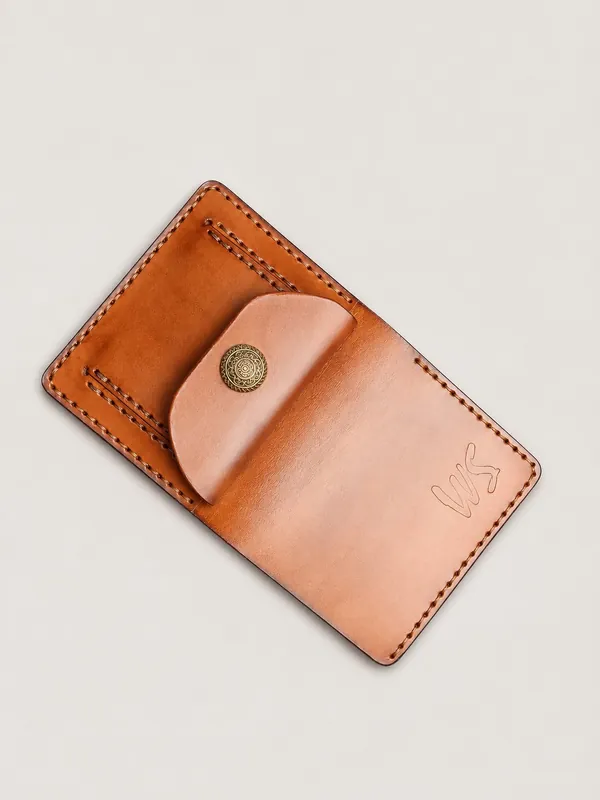
There is more to finding a handmade leather wallet than you might think. The range is wide, terms get mixed together—vegetable tanning, handmade, genuine leather—and it is easy to choose something on impulse that does not suit the way you use it. This guide gives you the criteria worth checking before deciding, so that when you find a model that interests you, you know exactly what to look at and what to ask.
Choosing a handmade leather wallet is not just about the material. The manufacturing process matters, but so do the format, capacity and whether the piece will keep up with your daily routine. Before looking at any particular model, start with the basics: knowing what you actually need.
Check what you carry before choosing a format
The most common mistake when buying a handmade wallet is choosing the format before taking an honest inventory of what you carry every day. Spend a week paying attention: how many cards do you actually take out, rather than keep just in case? Do you carry cash regularly? Do you collect receipts or loose documents?
This quick inventory gives you the most practical information before buying: the format you really need. A classic bifold wallet has compartments for banknotes, several cards and perhaps coins, and is the most flexible option if your needs vary. A compact card holder works better for everyday use if you carry few cards and prefer to minimize pocket bulk. Slim wallets sit between the two: thinner than a bifold, with room for one or two banknotes.
Choosing the wrong format is the most frequent mistake, especially when you cannot try it beforehand. A handmade wallet represents real working time; it deserves ten minutes of thought before you decide.
What it means for leather to be vegetable-tanned
When a handmade leather item is described as “vegetable-tanned,” this refers to the process used to prepare animal hide—usually cattle hide—to turn it into leather. Extracts from tree bark and plants are used instead of the chromium compounds employed in industrial tanning. The result is usually firm, dense leather capable of developing a patina with use, although its specific behavior depends on the hide, thickness and finish of each piece.
Before going further, an important clarification: “vegetable tanning” describes the tanning method, not the material's origin. The leather is still animal hide; it does not mean vegan or plant-based. This distinction matters if you are looking for a synthetic or non-animal material, which belongs to an entirely different category.
Why does this process matter in an everyday wallet? Vegetable-tanned leather behaves in its own way: it is often stiffer initially than many chrome-tanned leathers—although this varies with the hide and finish—and requires care suited to each piece's finish. Over time, with appropriate maintenance, its tone and texture change in a way unique to each piece. It is not objectively better than other leather types in absolute terms; it is a material with a particular character worth understanding before committing to it.
What to look for in the construction when you cannot touch the piece
Buying handmade goods online has a real difficulty: you cannot feel the leather or fold the wallet to see how it responds. Photographs become your only assessment tool, and using them well means knowing exactly what to look for.
The stitching is the first indicator. In a hand-worked leather wallet, stitches are even and tight, generally using waxed thread. Very irregular stitches or unfinished thread ends point to careless finishing, regardless of price.
The edges reveal a great deal about the work invested. A hand-burnished edge, with the leather fibers sealed and free of fraying, shows that the artisan devoted time to a detail that does not take center stage in cover photographs but makes a difference with continued use. An unburnished edge that leaves fibers exposed will age less well and may feel uncomfortable if the wallet frequently rubs against your skin.
The hardware—fastenings, rings, rivets—should have a finish consistent with the rest of the piece. Loose hardware or a tone that does not suit the leather suggests components were chosen for cost rather than quality. If the available photographs do not show enough detail of the stitching, edges and interior, it is entirely reasonable to request additional images before deciding.
Questions worth asking before buying
Buying a handmade wallet is not the same as buying a mass-produced item. The artisan knows the details of each piece and can answer questions no product description fully covers. Before confirming any purchase, consider asking:
- What are the exact measurements, and what fits in each compartment?
- What finish does the leather have on this particular model, and how should it be maintained?
- Is it available now, or is it made to order?
- What is the delivery timeframe, and what does the final price include?
These questions do not signal distrust: they are the difference between a successful purchase and an avoidable disappointment. Especially when a piece is made to order or returns are not straightforward, it is worth having all the information before deciding.
How Woodman Studio pieces are made
Oleg Naumenko designs each model, selects the vegetable-tanned leather, dyes it and shapes it almost entirely by hand. There is no mass production: each piece passes through the same hands from beginning to end. You can see the process in more detail in the website's Handmade section and meet the artisan in About Oleg.
The models currently available are in the shop. If you have specific questions about availability, measurements or which model best suits your use, the most direct channel is the contact page or WhatsApp. To find out how to maintain vegetable-tanned leather once you have your piece, the Care section has the information you need.
Unsure which format suits you, or want to see the measurements of a particular model? Write to Woodman Studio before deciding: get in touch now.
Frequently asked questions
Is vegetable-tanned leather vegan?
No. Vegetable-tanned leather is animal hide tanned with plant extracts instead of chromium. The word “vegetable” describes only the tanning process, not the material's origin. If you are looking for a non-animal material, you would need to look in the category of synthetic or plant-based materials, which is entirely different.
How much does a handmade leather wallet cost?
The price varies with the model, format, material and production time, and there is no standard rate for handmade leather goods. For the specific prices of Woodman Studio models, check the shop or write via WhatsApp.
How can I tell whether a wallet's stitching is handmade?
In detailed images, look for even stitches with small variations characteristic of handwork, well-tensioned waxed thread and properly finished ends. Handmade stitching is regular without the mechanical perfection of industrial machines. If the photograph does not show enough detail, ask the artisan for an image of the interior or edges.
Which format works if I carry few cards and no cash?
A compact card holder suits this use well. It takes up less room than a bifold and is designed specifically for quick access to cards. If you sometimes also carry one or two banknotes, a slim wallet can be a useful middle ground.
Can I request more photos before buying?
Yes. This is common practice when buying handmade goods online. Requesting images of the interior, edges or stitching detail before deciding is perfectly reasonable, and any serious artisan can respond to those requests via WhatsApp or email.