
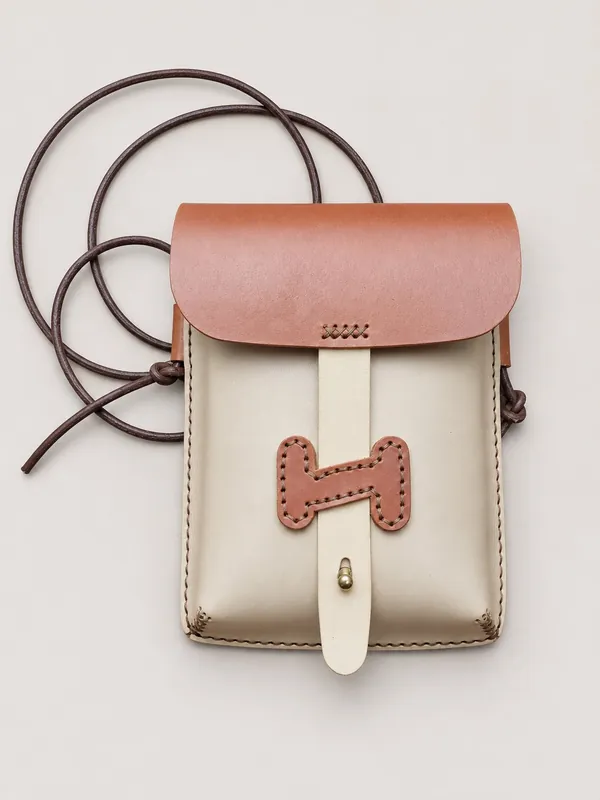
Of all the leather accessories you can give, a bag is the most personal. It also involves the most considerations: size, how it is carried, whether it opens with a fastening or without one, how much fits inside. These are decisions the person who will use it understands very clearly from the first time they hold it. When a bag works, it becomes something that goes out with them every day for years. When it does not fit, it stays in the wardrobe.
Giving a handmade bag, with everything that entails in terms of labour and material quality, makes a great deal of sense when you know the person well. And when there are doubts, it makes even more sense to enquire before deciding.
Why a bag is the hardest piece to get right as a gift
It is not that getting it right is impossible. It is that the margin for error is narrower than with a card holder or wallet, where the variables are more manageable.
A bag involves decisions about volume—whether it is compact for essentials or needs room for more things—about how it is carried—crossbody, over the shoulder, in the hand—and about how it fits into the recipient's daily life. Someone who uses public transport and needs quick access to their belongings has different needs from someone who drives and only wants a small bag for going out for a drink.
When you do not know for certain how your intended recipient uses their bags, there are two reasonable options: observe what they usually carry to work it out, or ask Oleg before deciding.
What to notice about the bag they currently carry
The most direct way to find your bearings is to look at what they already use. Not to copy it exactly, but to understand what works for that person.
Is it a compact bag carried crossbody, or a larger one carried over the shoulder? Do they usually carry lots of things, or just the minimum? Do they open their bag constantly throughout the day, or only when they reach their destination? Does their current bag have a fastening, or is it open?
Those observations give you more useful information than any general opinion about styles or trends. If they always carry a small bag with a fastening, that indicates a preference for security and compactness. If they carry a large tote without a fastening, they probably value accessibility over strict organisation.
What tends to go wrong when choosing a bag as a gift without that information is choosing the opposite of what they use: someone who always carries something compact will not suddenly want a large bag, even if it is more luxurious. And someone who genuinely needs space will not enjoy a bag that cannot hold what they usually carry.
Handmade leather bags: what makes them different
The difference between a handmade bag and a mass-produced one often shows in the construction details. The stitching of a handmade bag is planned for that particular model: the thread, tension and stitching path have a logic that comes not from an assembly-line machine but from someone making decisions about every join.
Vegetable-tanned leather also behaves in a particular way over time. It develops a patina—a variation in tone and surface—that gives it character with use. Two bags of the same model, carried by two different people for a year, look different because they have absorbed different patterns of use. That is part of what makes a handmade piece special: after a while, no two are exactly alike.
For the person receiving the bag, that process of natural personalisation may be something they value greatly, or something that does not particularly matter to them. Knowing a little about their relationship with their possessions—whether they like things that improve over time or prefer them to stay the same—helps you judge whether it is the right choice.
Colour and finish: how to get it right without knowing their exact preferences
Alongside size, leather colour is the variable that is easiest to get wrong when you lack specific information.
The safest starting point is neutral shades: the natural chestnuts, ambers and undyed shades of vegetable-tanned leather fit most wardrobes and do not depend on a seasonal trend. If the person usually wears neutral colours—beige, grey, navy blue, black—any of these works well.
Darker shades—dark brown, black, bottle green if available—are equally timeless and a little more formal. If the person has a more urban or professional style, these may be a closer fit.
Where it is worth being more cautious is with very specific shades: if you are not sure they will like a particular colour, it is better to consult Oleg and let him guide you through the options available at that time.
When it makes most sense to enquire before buying
For a handmade bag, a preliminary enquiry is not a formality: it is part of making the purchase work well. Oleg can help you identify which model in the catalogue best fits your description of the intended recipient—their usual style, how they will use it, whether there is a specific date—and that considerably reduces the chance of making a mistake.
He can also clarify practical matters: which models are available, whether there is a colour variant that fits what you are looking for, how the piece arrives and when it could be ready.
You can explore the catalogue models in the Woodman Studio shop and, once you have a general idea of what interests you, write to Oleg via WhatsApp or the contact page to settle the details. This is the usual channel for any questions about pieces and orders.
Frequently asked questions
Is a handmade leather bag a suitable gift if I do not know the person very well? It is a gift that works best when you genuinely know the recipient, especially regarding size and how they carry a bag. If there is a lot of uncertainty, it may be safer to start with a card holder or wallet, which involve fewer variables. If you want to give a bag, consulting Oleg before deciding greatly reduces the risk.
What distinguishes a handmade leather bag from one by a conventional brand? Hand construction involves decisions made piece by piece: the leather's thickness, the type of stitching, the edge treatment. It does not undergo the standardisation of an assembly line. Vegetable-tanned leather also usually develops its own patina with use, so the piece gains character over time, something synthetic materials do not develop in the same way.
How do you care for a vegetable-tanned leather bag? For routine maintenance, the safest choice is a soft, dry cloth, avoiding prolonged exposure to moisture and direct heat. Cleaning with moisture or using conditioners should be reserved for the artisan's instructions and depend on compatibility with each piece's finish; for a significant stain, ask for an assessment before applying any treatment. You can consult Woodman Studio's care section.
Is it better to give a bag or ask the person directly what they want? That depends on the occasion and the relationship. For a birthday or anniversary gift between people who know each other well, a carefully chosen bag can be very meaningful. If there is a lot of uncertainty, asking beforehand—or giving the opportunity to choose the piece together—can be an equally personal and safer option.
Do Woodman Studio bags come in different sizes? The catalogue includes several models with different proportions. To find out which models are currently available and their features, the most direct approach is to check the shop or write directly to Oleg via WhatsApp.